
What Phoenix HOA Communities Typically Include
July 2, 2026
July 2, 2026
Wondering what an HOA in Phoenix actually includes before you buy? You are not alone. HOA communities can offer useful shared amenities and a more managed environment, but what is covered, what is restricted, and what you pay for can vary a lot from one community to the next. This guide will walk you through what Phoenix HOA communities typically include, what rules you should expect, and what to review before you commit. Let’s dive in.
In Phoenix, HOA communities are usually set up as either planned communities or condominiums. That difference matters because Arizona law governs them under different statutes, and condominiums are typically subject to a more detailed legal framework.
Most associations also operate through a set of governing documents. These usually include the declaration or CC&Rs, bylaws, and community rules. If you are comparing properties, it helps to avoid assuming every HOA works the same way just because the monthly dues look similar.
For new subdivisions, the Arizona Department of Real Estate requires a Public Report before the purchase contract is signed. That report can include details about common facilities, utilities, taxes, assessments, local services, and the property owners association, and buyers are advised to verify the information rather than rely on assumptions.
The most common HOA costs in Phoenix are tied to shared upkeep and maintenance. In many communities, your dues help pay for common-area landscaping, irrigation, exterior entry features, and maintenance of shared spaces.
Landscaping and water use are especially important in the Phoenix market. The City of Phoenix notes that HOA landscape water costs can make up a large part of an association budget when the community maintains extensive common landscaping, and outdoor watering is a major share of residential water use. In Phoenix, up to 70% of resident water use can go toward outdoor watering.
Depending on the community, dues may also support:
The key point is simple: monthly dues do not mean the same thing in every community. One HOA may focus mostly on exterior upkeep and entry maintenance, while another may include a long list of amenities that require larger operating budgets and stronger reserves.
Amenity packages in the Phoenix area vary widely, but current examples across the market show a familiar pattern. Many communities are designed around low-maintenance living, shared recreation, and outdoor spaces that fit the desert lifestyle.
In practical terms, buyers will often see features like:
At the higher-amenity end of the market, some communities may also include features such as tennis, pickleball, spa facilities, community gardens, fishing lakes, or on-site dining spaces. These offerings are less universal, but they show how broad the range can be across Greater Phoenix.
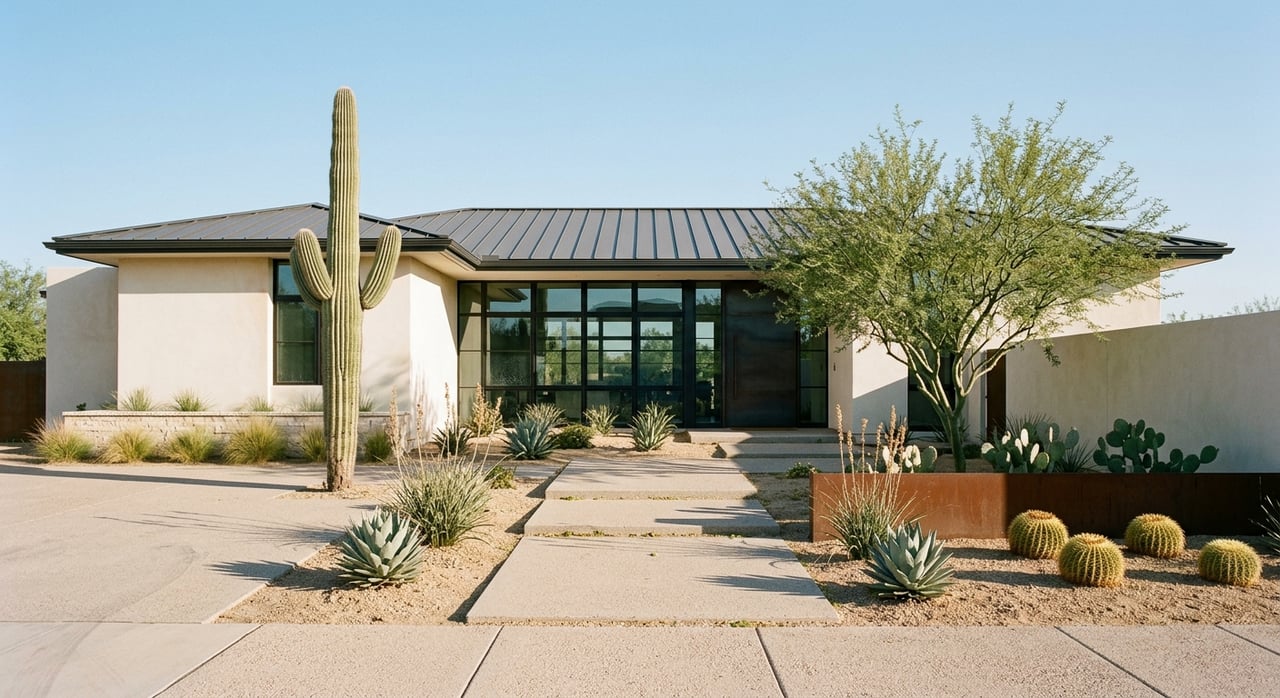
In Phoenix, landscaping is not just a visual feature. It is often one of the biggest budget items in an HOA. When a community has large greenbelts, entry monuments, shared turf, or planted common areas, the costs of irrigation, maintenance, and water management can be significant.
That matters to you as a buyer because attractive common areas usually come with ongoing expenses. A well-kept entrance, maintained park space, or lush shared landscaping can add to the overall appeal of a community, but it is smart to understand that those features are part of what your dues may be supporting.
Living in an HOA community in Phoenix usually means there are more detailed rules around exterior appearance and property use. Arizona consumer guidance notes that CC&Rs in HOA subdivisions may restrict things like landscaping choices, RV parking, play equipment, satellite antennas, and other visible changes.
Many associations also use architectural or design review committees. These committees may review changes to items such as paint colors, yard changes, additions, or exterior improvements, depending on the community’s documents.
That said, HOA authority is not unlimited. Arizona law addresses specific homeowner protections involving certain flags, political signs, some door-to-door political activity, solar energy devices, certain parking situations for public service and public safety vehicles, and limits on some rental-document demands.
The practical takeaway is that HOA living often brings a tradeoff. You may get shared amenities and a more consistent community appearance, but you will usually have less freedom than you would in a non-HOA property when it comes to visible exterior changes and some property-use decisions.
If you are buying in a resale planned community, Arizona law requires a substantial disclosure package. This packet can include the declaration, bylaws, rules, assessments, insurance information, reserve balances, potential violations, pending litigation, the current operating budget, the most recent annual financial report, and the most recent reserve study if there is one.
That information gives you a much clearer picture of what you are buying into. It can help you understand not just the lifestyle side of the HOA, but also the financial and administrative side.
Here are the most useful questions to ask as you review an HOA community:
These questions can make a big difference in your day-to-day experience after closing. They can also help you compare two homes that may look similar on paper but come with very different community expectations.
If you think you may rent out the property in the future, it is important to review the HOA rules early. Rental policies can shape both your flexibility and your long-term plans.
Arizona law limits the information an HOA can require about tenants. In general, the association may request names and contact information for adult occupants, lease dates, and vehicle details, and it may charge a modest fee for the disclosure. Even so, individual community rules can still affect how rentals function in practice, so it is worth reviewing those details carefully.
One of the most overlooked parts of HOA due diligence is enforcement. Buyers often focus on pools, gates, and clubhouses first, but the way an association handles late payments, notices, and violations can matter just as much.
In Arizona, unpaid assessments can become liens and may, in some circumstances, lead to foreclosure exposure. That is why it is wise to ask how the association approaches collections and whether payment plans are available if issues arise.
The best approach is to look at an HOA the same way you would look at the home itself. You want to understand the condition, the costs, the rules, and how the property fits your lifestyle.
If you are buying from out of state or comparing several Phoenix-area communities at once, this step becomes even more important. A calm, detailed review of the documents, amenities, and budget can help you avoid surprises and make a more confident decision.
Whether you are looking at a condo, townhome, villa, or single-family home in an HOA setting, the goal is the same. You want to know what is included, what is expected, and whether the community’s structure supports the way you want to live.
If you want a clear, practical review of Phoenix HOA communities as you search, Taylor Mason can help you compare options, understand the details, and move forward with confidence.
Stay up to date on the latest real estate trends.

I approach real estate the same way I approached the restaurant and hospitality world—as a service profession first. With a background spanning executive chef leadership, international business, and high-stakes negotiations, I bring a level of care, adaptability, and calm that my clients immediately feel.

TAYLOR MASON - RESIDENTIAL
ADDRESS 4222 N Marshall Way Ste A Scottsdale AZ 85251