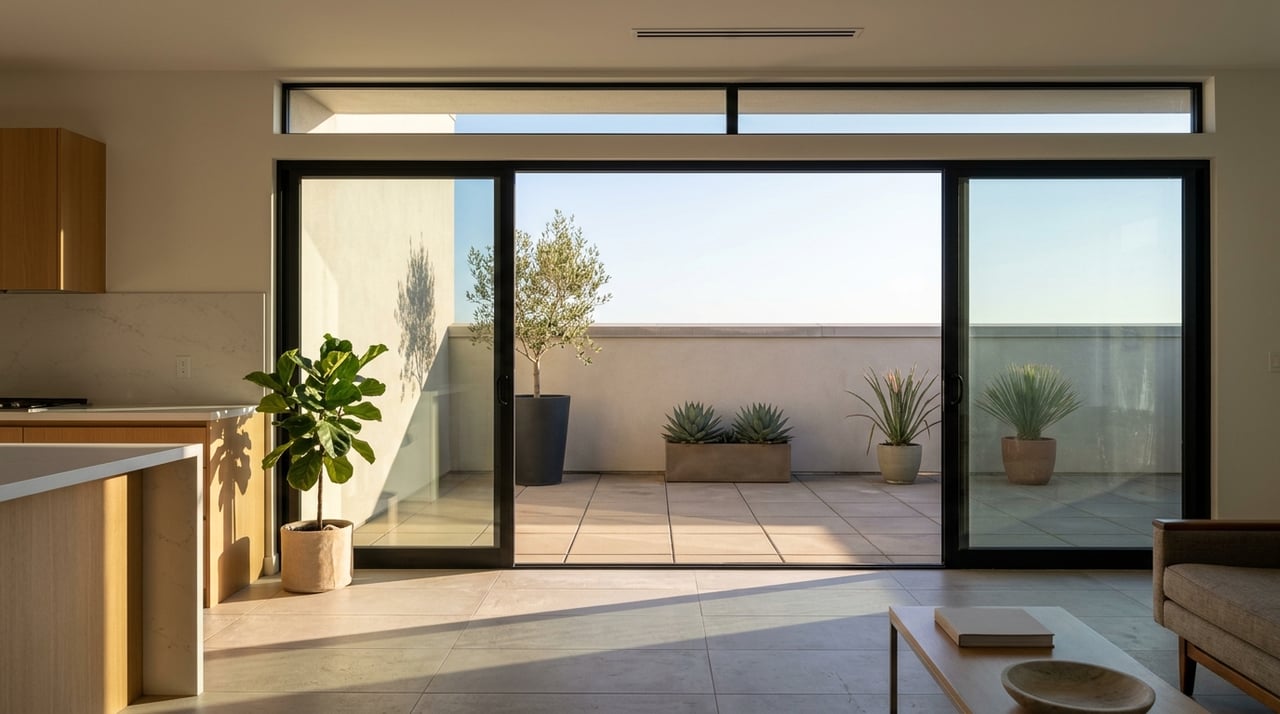
Condo vs House in Phoenix: Should You Buy a Condo, Townhome, or House?
June 25, 2026
June 25, 2026
If you’re deciding between a condo, townhome, or house in Phoenix, the right answer is rarely just about square footage. In this market, your choice also affects your maintenance load, monthly costs, privacy, and even how you handle the desert heat. If you understand how each option works in Arizona and what it means for daily life in Phoenix, you can make a much clearer decision. Let’s dive in.
Phoenix adds a few practical factors that can make your decision look different than it would in another city. According to NOAA climate normals for Phoenix Sky Harbor, the area averages 111.3 days each year with highs of at least 100 degrees, along with just 7.22 inches of annual precipitation.
That matters because outdoor upkeep, cooling demands, and water use are part of real ownership cost here. The City of Phoenix also promotes xeriscape and other low-water landscaping practices, which makes yard size and exterior responsibilities especially relevant when you compare attached and detached homes.
The current market also gives buyers another reason to look closely at attached options. In Phoenix’s May 2026 local market update, the median sales price was $490,000 for single-family homes and $315,000 for townhouse and condo properties.
That same report showed 58 days on market for single-family homes versus 99 for townhouse and condo properties, along with 3.7 months of supply for single-family versus 6.8 months for townhouse and condo. In practical terms, attached homes may offer more relative inventory and potentially more negotiating room right now.
Before you compare lifestyle and cost, it helps to understand that Arizona does not treat condos and townhomes as the same thing. In casual conversation, people often use those terms loosely, but the legal structure is what really matters.
Arizona law defines a condominium as real estate where some portions are separately owned and the rest is held in common ownership. Unit owners also have an undivided interest in the common elements.
For you, that usually means more shared ownership of the exterior and common areas. It also means the association often plays a larger role in maintenance, repairs, and day-to-day community rules.
According to the Arizona Department of Revenue, a townhouse or P.U.D. commonly means you own the land under your unit, while other land or shared areas are commonly owned or controlled by the homeowners association. That can create a setup that feels more independent than a condo, even if the homes share walls.
Still, not every townhome works the same way. The recorded plat, CC&Rs, and title documents determine the ownership structure, so the listing description alone is not enough.
A detached single-family house usually offers the most direct control because there is less shared ownership by default. In most cases, you are responsible for the property’s exterior, landscaping, and ongoing upkeep unless a separate association says otherwise.
That added control can be appealing, but it also comes with more responsibility. In Phoenix, where heat and water-conscious landscaping are real factors, that tradeoff deserves careful attention.
A condo is often the lowest-maintenance option of the three. Association fees commonly help fund exterior repairs, common areas, and sometimes water, sewer, trash, insurance, amenities, and reserves.
For many buyers, that can be a strong fit in Phoenix. If you want less hands-on exterior work during long hot summers, condo living may simplify day-to-day ownership.
The tradeoff is less privacy and more shared decision-making. Because condo ownership includes joint ownership of common elements, you should expect a more community-managed living experience than you would in a detached house.
Condos can also require a little more loan planning. HUD notes that FHA-insured condo loans generally require an FHA-approved project or Single-Unit Approval, and that process can involve review of insurance, financial condition, title structure, legal issues, and property condition.
Townhomes often land in the middle. They can offer a balance between the easier upkeep of a condo and the greater control of a detached house.
In Arizona, townhome or P.U.D. ownership commonly includes the land under the unit, which can feel more like traditional homeownership. At the same time, the community may still share walls, landscaping, or common areas managed by an HOA.
That can make a townhome a smart option if you want attached-home pricing but do not want the full maintenance load of a house. It may also appeal to buyers who want more autonomy than a condo without taking on every exterior task themselves.
The key point is that no two townhome communities are exactly alike. In Phoenix, I always recommend looking closely at who owns the exterior, what the HOA maintains, and how much flexibility the governing documents allow.
A detached house usually gives you the most privacy and the most control over your property. If your priorities include a private yard, fewer shared walls, and more freedom over exterior use, a house may be the strongest fit.
It is also typically the option with the highest maintenance load. You are usually responsible for landscaping, irrigation, exterior repairs, and the ongoing work that an association might otherwise absorb in a condo community.
That is especially relevant in Phoenix. With frequent triple-digit heat and the city’s emphasis on water-saving landscaping, yard care is not just a design choice. It is part of your time commitment and ownership budget.
Price is another factor. Based on Phoenix’s May 2026 market update, single-family homes had a notably higher median sales price than townhouse and condo properties.
The purchase price matters, but it is only one part of the equation. To compare these options clearly, it helps to think in terms of total monthly ownership cost.
Condo and townhome communities often have mandatory monthly fees. Those fees may cover exterior maintenance, common areas, insurance, water, sewer, trash, parking, amenities, and reserve contributions, but you need to verify the exact scope for each property.
A higher fee is not automatically bad if it covers meaningful expenses you would otherwise pay separately. The real question is what value you are getting in return.
Fannie Mae notes that condo insurance costs are typically lower than single-family home policies. That can help offset some of the monthly association expense, although the exact numbers depend on the property and the community’s master insurance policy.
Reserve strength also matters. Buyers should ask about reserve funds, pending special assessments, and the scope of the master policy before moving forward.
Property taxes in Maricopa County are based on assessed value and the combined levy of taxing jurisdictions, not simply on whether the home is a condo, townhome, or house. The county assessor’s Notice of Value lists the Full Cash Value, Limited Property Value, assessment ratio, and assessed value, while the treasurer calculates the actual bill.
Because land and improvements are valued together, a detached home with more land or higher-value improvements may carry a higher overall tax burden than an attached home. But the actual tax amount depends on that specific parcel and tax district.
The smartest way to compare these home types is to go beyond the listing photos and ask practical questions early. That is especially true in Phoenix, where ownership structure and exterior responsibility can change the long-term experience quite a bit.
Here are the questions I would want answered before making a decision:
For buyers relocating or buying remotely, these details are even more important. A property can look similar online but operate very differently once you review the title documents and community rules.
If you want the easiest day-to-day upkeep, a condo may be the best match. This option can make sense if you are comfortable with HOA governance and want more of the exterior work handled for you.
If you want a middle ground, a townhome may offer the right balance. It can give you attached-home pricing and some community-managed upkeep while still feeling more independent than a condo.
If you want the most privacy and control, a detached house may be worth the added cost and responsibility. This option often fits buyers who are prepared for more maintenance and want the fewest shared ownership constraints.
In Phoenix, the best choice is the one that matches not only your budget, but also your tolerance for maintenance, your need for privacy, and how involved you want to be with exterior care in a desert climate.
Whether you’re local or buying from out of state, I believe the clearest decisions come from slowing down and looking past the label. If you want help comparing condos, townhomes, and houses in Phoenix with a calm, detail-first approach, connect with Taylor Mason.
Stay up to date on the latest real estate trends.
I approach real estate the same way I approached the restaurant and hospitality world—as a service profession first. With a background spanning executive chef leadership, international business, and high-stakes negotiations, I bring a level of care, adaptability, and calm that my clients immediately feel.

TAYLOR MASON - RESIDENTIAL
ADDRESS 4222 N Marshall Way Ste A Scottsdale AZ 85251