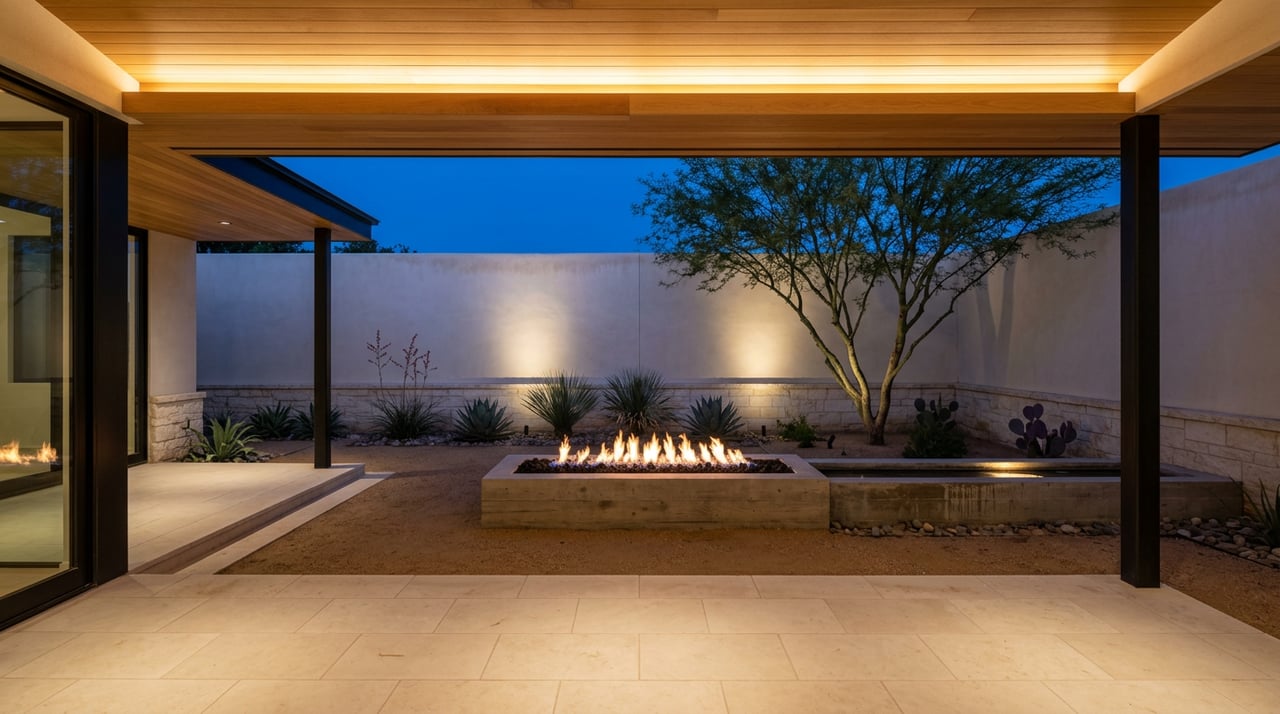
Phoenix Summer Nights in 2026: The Openings and Rituals Rewriting the Off-Season
July 9, 2026
July 9, 2026
For a long time, summer in Phoenix was treated as the season to endure. Restaurants held their openings for October. Bars ran skeleton crews. The unspoken civic assumption was that anyone with the means to leave had already left, and everyone else was inside with the blinds drawn.
That assumption has quietly collapsed. Look at the July 2026 opening calendar, then look at what the museums, the light rail, and the marketplaces are programming after dark, and a different shape emerges. Summer is now the season operators are building for on purpose. If you live here, your evenings can be denser in July than they are in February, provided you know what has changed.
Historically, new Valley restaurants rushed to open during the busy winter and spring months and shied away from a hard launch in the slow summer season, but over the last few years more restaurants have been bucking that trend and opening into the dry Arizona heat. This year the turn is unmistakable.
A short list of what is landing this summer, with the specifics worth knowing:
Read that list as a pattern rather than a menu. Two of the six are downtown, two are in Arcadia, one is at Desert Ridge, one is on Grand. The geography matters because it tracks with where people are actually walking after 8 p.m. when the temperature finally drops below 100. Operators are pricing summer into their pro-forma now.
The other half of the story is what happens in the calendar even when no one is opening anything. Institutional programming has stopped ceding June through August.
None of these are new inventions, but the density has changed. Five years ago the summer calendar had gaps you could drive a truck through between Memorial Day and Labor Day. In July 2026 you have a Saturday-night ritual at the Botanical Garden, a First Friday that draws thousands, a light-rail programming layer, and a weekly outdoor concert series on the north side, before you have even opened the restaurant list.
Consider what a Thursday actually looks like if you use the new pieces on the board.
You wait out the worst of the heat indoors. Around 7:30 p.m. the pavement releases its temperature and you head to Grand Avenue. Grandioso for pizza that opened three weeks ago, then a walk two blocks to Tap That or a First Friday drop-in the following week. If you are on the east side of the map instead, you eat at Poolboy Taco in Arcadia and end at Hornbill for a nightcap once it opens, both within a mile of each other on Camelback and Indian School. If you have family visiting and want the outdoor experience without the outdoor commitment, Flashlight Nights at Desert Botanical Garden gets you a two-and-a-half-hour window with real desert programming and a hard 9:30 p.m. end. The Ride the Rail loop absorbs the parking problem downtown entirely on any of these routes.
The point is that the pieces now fit together into an actual evening. You are not choosing between one anchor event and going home. You are choosing between three or four legitimate weeknight itineraries that would have been unavailable in July 2021.
For the residents who stayed in town over the Independence Day weekend, the options divided cleanly into two categories. The Arizona Diamondbacks staged their Fireworks Spectacular over Chase Field on Friday, July 3 and Saturday, July 4 with postgame fireworks after games against the Milwaukee Brewers. The Arizona Celebration of Freedom at the Mesa Convention Center at 263 N. Center St. ran from 6 to 10 p.m. with fireworks at approximately 9:30 p.m., alongside live music, games, arts and culture booths, cool zones, and a food court. The Diamondbacks version is the air-conditioned bet. The Mesa version is the lawn-blanket bet. Both are worth knowing about for next year's calendar.
The change is not that Phoenix suddenly has a summer culture. Locals have always had one, built around 5 a.m. hikes and late pool hours and the specific pleasure of a monsoon storm rolling in from the east. The change is that the commercial and institutional layers finally match what residents were already doing. Chefs are opening in July. Museums are programming past 9 p.m. through August. The light rail is running themed cars. The economic bet under all of it is that the summer population is stable enough, and spending enough, to underwrite a real off-season economy.
For anyone thinking about the shape of the city they live in, that shift matters more than any single opening. It is the difference between a market that empties out for four months and one that runs twelve. When you or someone you know is eventually weighing whether to plant deeper roots here or move, that distinction is worth having in mind.
If you are thinking through a move, a sale, or the quieter question of whether the neighborhood you are in still fits the life you are building, Taylor Mason is glad to talk it through. Let's Connect.
Stay up to date on the latest real estate trends.
I approach real estate the same way I approached the restaurant and hospitality world—as a service profession first. With a background spanning executive chef leadership, international business, and high-stakes negotiations, I bring a level of care, adaptability, and calm that my clients immediately feel.
TAYLOR MASON - RESIDENTIAL
ADDRESS 4222 N Marshall Way Ste A Scottsdale AZ 85251