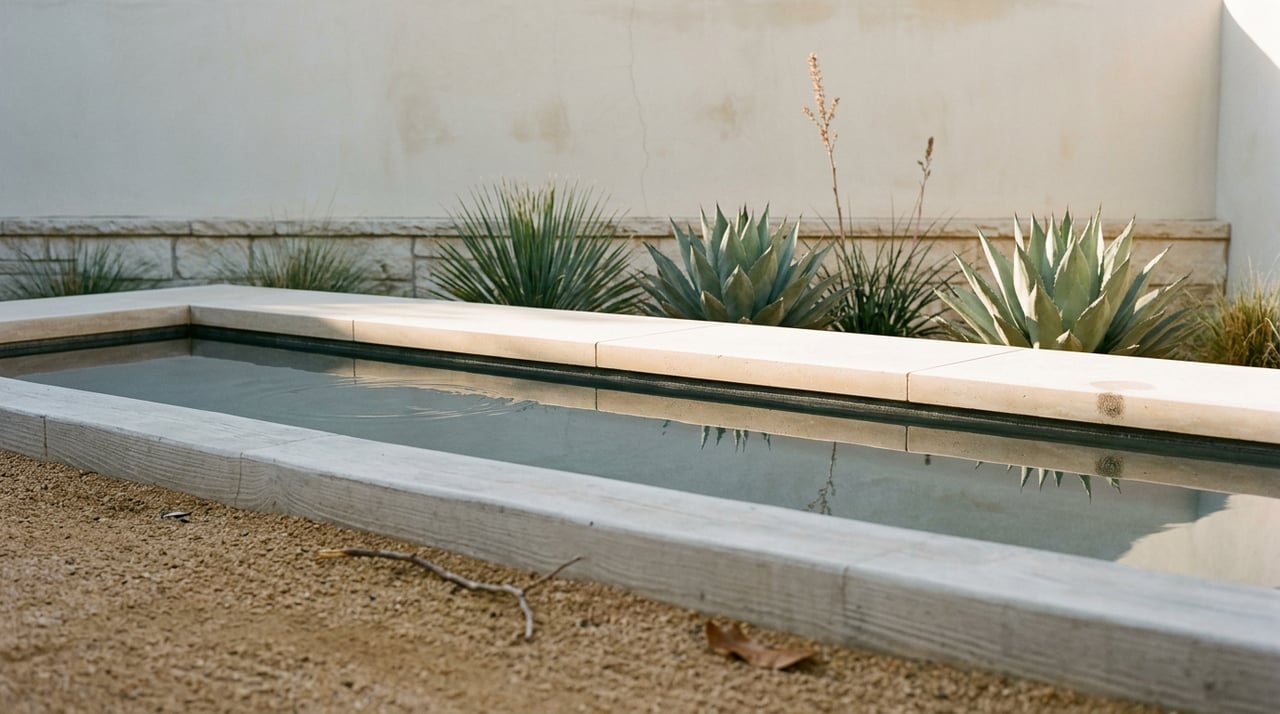
North Scottsdale Horse Property Due Diligence Playbook
July 16, 2026
July 16, 2026
The permanent Rio Verde Foothills water filling station changed the conversation around horse property northeast of Scottsdale. It did not end the need for careful water diligence.
The station opened January 1, 2026, replacing the temporary arrangement that ended the night before. Buyers now have a durable piece of regional infrastructure to consider, but access is not universal. Eligibility attaches to an approved assessor’s parcel number, commonly called an APN, and a parcel split may affect it.
That distinction matters. The old question was whether hauled water would remain available. The better post-standpipe question is more precise:
What water source serves this parcel, what rights or eligibility transfer with it, and how does the complete system function for a household and horses?
My background as a managing partner in Arabian horse breeding taught me to evaluate a facility as an operating system. The home, land, water, barn, arena, access, and legal use must work together. A beautifully finished residence cannot correct a water arrangement that is undocumented or a barn use that conflicts with the applicable rules.
Some properties marketed with a Scottsdale address are inside the City of Scottsdale. Others are in unincorporated Maricopa County. The distinction determines which zoning standards, permit records, and horse-use rules apply.
Before evaluating the barn count or arena dimensions, establish:
The City of Scottsdale provides a Property Information and Records system for researching zoning, permits, site plans, case history, mapped easements, and parcel boundaries. Unincorporated properties require a separate search through Maricopa County Planning and Development.
A listing description can identify features. It cannot establish legal use or permit status.
North Scottsdale horse property due diligence should place the parcel into one of four practical categories:
| Water arrangement | First verification |
|---|---|
| Municipal or regulated utility service | Provider, account transfer, service to the parcel, and recent usage |
| EPCOR standpipe water | APN eligibility, transfer process, account status, storage, and delivery |
| Private well | Registration, physical location, ownership, performance, records, and water quality |
| Shared well or shared tank | Recorded rights, access, expenses, maintenance, and failure procedures |
Each category carries a different operating profile. “Water available” is too broad to support an offer.
The EPCOR Rio Verde Foothills filling station is located at 26788 N. 176th Street and operates from 7 a.m. to 6 p.m. daily. Customers need an approved account, access number, and PIN. Water can be delivered by an insured hauler or self-hauled after a required safety orientation.
EPCOR says eligibility transfers to the new owner when an approved property sells. That is encouraging, but written confirmation tied to the APN should still be obtained. A tank on the property is evidence of equipment, not evidence of standpipe eligibility.
As of July 2026, EPCOR’s approved rates are:
EPCOR’s example at 3,200 gallons per month is approximately $127.10 for Full Service and $277.10 for Standby Service. Those figures do not include the hauler’s separate delivery invoice.
A horse-property budget should use the property’s actual records instead of EPCOR’s household example. Request recent EPCOR statements, hauling invoices, delivery frequency, tank capacity, livestock usage history, and records for pumps or treatment equipment.
EPCOR also states that accounts exceeding twice the median residential usage for two consecutive months may risk disconnection. Customers with higher needs, including livestock, may request review. If the current owner has an accommodation, confirm how it applies after the sale.
A hauled-water inspection should follow the full route from the road to the trough. Review:
Shared tanks need another layer of documentation. EPCOR requires each property to have its own account, and all participants must select the same service type. Water purchased under a shared PIN is billed to the PIN owner.
A buyer should understand who owns the tank, who pays for electricity and repairs, how access is protected, and what happens if a neighboring owner sells or stops paying.
The Arizona Department of Water Resources well registry is the logical starting point for a private well. It is not the final answer.
ADWR cautions that a mapped point may not show the precise physical location and that registration can remain under a former owner’s name. Reconcile the well record with the survey, legal description, physical equipment, deeds, and title documents.
If the well is physically located on the property being purchased, ADWR requires an ownership change. The current fee is $30 per well. ADWR maintains the registry but does not make a legally binding determination of well ownership.
The inspection should address:
Private wells are not regulated like public water systems. ADEQ advises owners to conduct periodic sampling for bacteria and other contaminants. Arizona Cooperative Extension’s Well Owner’s Guide includes annual certified-laboratory testing for total coliform bacteria, total dissolved solids, pH, nitrate, and relevant metals.
Clear water is not a substitute for current testing.
Shared wells require careful document review because ADWR does not regulate shared-well agreements. Examine whether the agreement is recorded and binding on future owners. It should be reviewed for parcel access, electrical expense, repair allocation, pumping limits, testing, reserve funding, nonpayment, and procedures during system failure. Legal counsel can advise on the agreement’s effect.
“Horse property” can describe a private residence with a few personal horses, a training operation, a boarding facility, or land with unused equine improvements. Those uses are not interchangeable.
Within the City of Scottsdale, personal horses are generally allowed on single-family and two-family residential properties with a city-approved habitable residence. Commercial boarding, training, farms, ranches, and commercial stables can involve separate zoning or conditional-use requirements. The city also directs owners to review applicable CC&Rs and HOA rules.
In unincorporated Maricopa County Rural zoning districts, limited equestrian activity may be accessory to a residence. The county’s May 4, 2026 equestrian-use directive identifies several uses outside the normal accessory allowance, including boarding six or more horses, certain riding lessons, horse rentals, and events involving 25 or more people. Some activities may require a Special Use Permit.
Verify the buyer’s intended use, not only the seller’s present operation. An agricultural classification or exemption does not automatically approve every arena, residence, pool, light, barn, or guest house.
A shaded barn, finished tack room, lighted arena, wash rack, and guest accommodations may add substantial utility. Their contribution to value depends on condition, legal use, placement, and documentation.
Horse facilities often evolve over several ownership cycles. Barns, shade structures, electrical service, fencing, plumbing, storage, arena lights, and living areas may have been added at different times.
Maricopa County advises buyers to compare permit records with physical observations and aerial imagery. An unpermitted structure will not appear in the record simply because it has stood on the property for years.
The physical review should consider:
This is also where a polished residence and a tired facility should be separated in the pricing analysis. Cosmetic quality inside the home does not erase deferred work outside it.
Arizona requires a qualified septic inspection within six months before a property transfers. The seller must provide the inspection report and available records before closing. The buyer must file a Notice of Transfer within 15 calendar days after closing. Maricopa County currently lists a $50 fee per parcel.
Use the county’s septic transfer guidance to confirm the process, then reconcile the permit and physical system with the residence, casita, and any barn plumbing.
A pass or fail summary is not enough when future improvements are planned. Identify the tank, disposal area, system capacity, maintenance history, and replacement area. Determine whether a proposed arena, wash area, addition, or accessory structure could conflict with the system.
The McDowell Sonoran Preserve contains more than 30,500 acres and over 230 miles of multiuse trails. Several Scottsdale trailheads support equestrian staging, but proximity to the Preserve does not establish legal ride-out access from a private gate.
Trace the actual route. Confirm recorded access, crossings, gates, and trailer requirements.
Useful staging points include:
This distinction affects daily livability. Direct legal access and convenient trailer staging are different features and should be evaluated separately.
For an out-of-state buyer, a horse-property video should document function rather than produce a highlight reel.
I begin with the approach road and tanker route, then show the gate, tank, pumps, electrical panels, barn aisles, stalls, footing, fencing, wash area, arena, storage, trough flow, trailer space, and neighboring access points. Equipment labels and visible wear receive close-up coverage. The tour should also trace the practical route toward public trails.
After the live visit, unedited clips and documents allow the buyer to compare what appears on screen with permits, site plans, water records, and disclosures.
Before or immediately after acceptance, the team may include a general home inspector, qualified equine-facility contractor or specialist, water-system or well professional, septic inspector, surveyor when boundaries are uncertain, lender, insurer, title and escrow professionals, and legal counsel for shared-use agreements.
The broader Phoenix-area MLS was in transition in June 2026. ARMLS reported sales volume about 8 percent above June 2025, although roughly five percentage points reflected an extra business day. Active inventory was 5 percent lower year over year, while annual asking-price declines had moderated toward approximately 2 to 3 percent. Under-contract listings had risen year over year for 12 consecutive months.
Those regional figures provide context, not a valuation formula for a North Scottsdale horse property. There is no reliable current public dataset isolating this specialized segment.
A property-specific analysis should separate:
From there, findings can support a repair request, credit, price adjustment, revised terms, or a decision not to proceed. Calm negotiation begins with organized evidence.
The permanent standpipe improved regional water certainty. It did not turn water into a box that can be checked from a listing sheet.
The post-standpipe buyer should verify the APN, jurisdiction, water rights or eligibility, operating system, intended equine use, permits, septic, access, and facility condition before assigning value. That process protects the lifestyle the property is meant to support and gives each negotiation a clearer factual foundation.
If you are considering a North Scottsdale equestrian property, I can coordinate a disciplined in-person or remote diligence process, organize the right specialists, and help translate the findings into measured offer terms. My work through Compass is grounded in responsive service, clear education, and fiduciary-first representation.
Let’s Connect.
Stay up to date on the latest real estate trends.
I approach real estate the same way I approached the restaurant and hospitality world—as a service profession first. With a background spanning executive chef leadership, international business, and high-stakes negotiations, I bring a level of care, adaptability, and calm that my clients immediately feel.
TAYLOR MASON - RESIDENTIAL
ADDRESS 4222 N Marshall Way Ste A Scottsdale AZ 85251